Full-Size Coach Charter
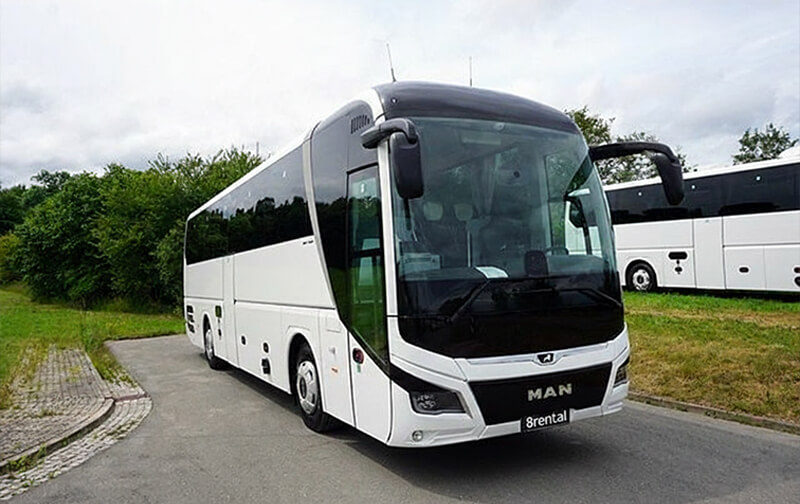
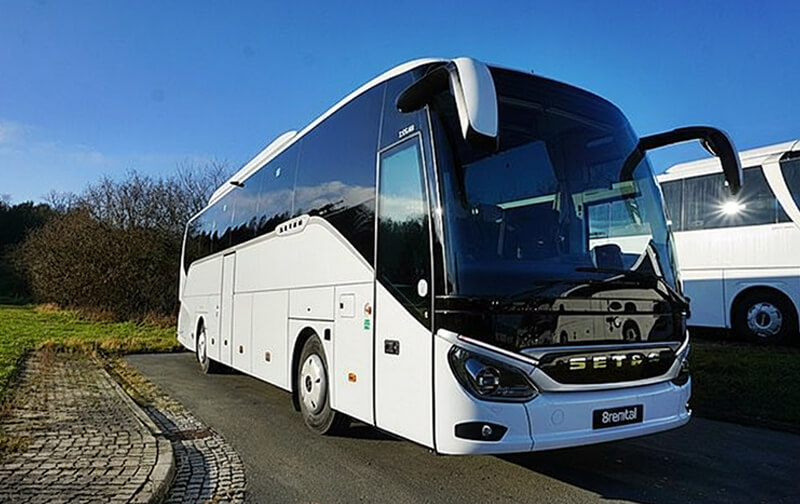
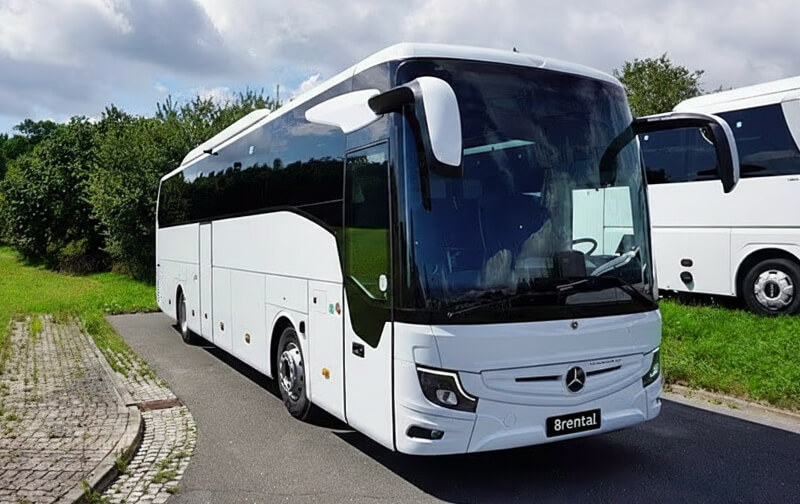
The full-size coach is the workhorse for big groups: one vehicle, one driver, underfloor bays for the bags. Its size is also its limit, so check where it has to stop before you book it.
Size and seats
Full-size coaches typically seat 45 to 57. That is a range, not a promise: the quote states the seat count for the vehicle offered, and that is the number to plan with. Luggage goes in underfloor bays, which makes this the default for airport runs, cruise transfers and multi-day tours.
The driver needs an MR licence for a two-axle coach over 8 t GVM, or HR for three or more axles, and each state adds its own authorisation on top, for example the Bus Driver Authority in NSW or driver accreditation in Victoria.
At a glance
- Seats: 45-57
- Luggage: Underfloor luggage bays
Typical features
- Two-axle coach over 8 t GVM: MR (medium rigid) licence; three or more axles: HR (heavy rigid), which also covers articulated buses
- Drivers also need state bus driver authorisation, such as a NSW Bus Driver Authority or Victorian bus driver accreditation
- A fatigue-regulated bus under the Heavy Vehicle National Law: over 4.5 t GVM and built to carry more than 12 adults, including the driver
- HVNL standard hours: no more than 12 hours' work in any 24 hours, with at least 7 continuous hours of stationary rest
- Western Australia and the Northern Territory have not adopted the HVNL and apply their own fatigue rules
- ADR 68 sets seatbelt and seat-strength rules for heavy buses and coaches built from 1 July 1994; route-service buses are excluded
Where a big coach struggles
Length and height decide a lot. A coach over 12.5 m, or with more than 2.8 m clearance height, is Class B on Sydney toll roads, and between the M1 and Sydney such a coach must use NorthConnex, not Pennant Hills Road. Scenic World's parking garage clears only 2 m, so coaches set down on Violet Street instead. Wallaman Falls is out: the road in from Ingham is signposted against buses. The Kangaroo Island ferry carries up to 4 coaches on its larger vessel, so book the crossing early.
Open-speed stretches of the Stuart Highway do not help either: heavy vehicles, coaches included, stay at 100 km/h, so coach times run longer than car times.
Hours and belts
A full coach is a fatigue-regulated bus under the HVNL. Its standard hours cap work at 12 hours in any 24, with 7 straight hours of stationary rest. Western Australia and the Northern Territory apply separate fatigue law. ADR 68 sets belt and seat-strength standards for coaches built on or after 1 July 1994.
Questions
How many people fit in a full-size coach?
Typically 45 to 57 seated. The exact number depends on the vehicle, and the quote states it.
When is a coach the wrong choice?
On narrow hinterland roads, at venues with low car parks, or for small groups going to several tight stops. A midi coach or minibus often works better there.
Can one coach do two jobs in a day?
Often, if the driver's hours allow. Give both jobs' times and the operator will say whether one driver can cover them.
Other charter services
- Conference and Company Event Coach Charter
- Coaches for School Excursions and Camps
- Team Buses and Coaches for Clubs and Carnivals
- Guest Coaches for Weddings
- Coach Charter for Winery Days
- Coach Day Trips from Australian Cities
- Coach Transfers to and from Cruise Ships
- Accessible Coaches and Minibuses for Groups
Get a coach quoted
Tell us the date, the route and how many are travelling. A licensed partner operator quotes a coach with a driver, and you decide.
Request a quote or call +61485016608